rydra_wong: Lee Miller photo showing two women wearing metal fire masks in England during WWII. (Default)
rydra_wong ([personal profile] rydra_wong) wrote2026-01-07 01:06 pm
Entry tags:

PSA to US people

As well as Venezuela, I think you might want to start phoning your representatives and screaming about how very much you do not think the US should invade and occupy Greenland.

I don't know how it's being reported on in the US, but it's looking extremely imminent over here:

https://www.theguardian.com/us-news/2026/jan/06/trump-greenland-control-us-military
https://www.theguardian.com/world/2026/jan/07/france-and-allies-discuss-possible-response-to-donald-trump-us-invasion-of-greenland
https://news.sky.com/story/trump-is-likely-gambling-he-could-get-away-with-greenland-grab-as-nato-needs-us-more-than-he-needs-it-13491116
sabotabby: (books!)
sabotabby ([personal profile] sabotabby) wrote2026-01-07 07:10 am
Entry tags:

Reading Wednesday

 Just finished: The Magic Mountain by Thomas Mann. Did you know that the edition I have ends with an afterword from the author asking people to read his 1200-page book twice? Anyway I am very proud of myself as I managed to finish it around 30 minutes before the hold was due back at the library.

So, is it good? Yes. Do I totally get it? Not totally, though yes, more than I would have if I'd read it when I was 16. Definitely the time stuff, the illness stuff, the characters who are thinly veiled stand-ins for pre-WWI European political debates, yes. But of course, it's a very different world now—there is no longer the temptation to embrace illness as freedom, the idea that you can just convalesce for years in what amounts to a different reality, the fairy-tale world of the sanatorium. Which is why the ending hits so brutally hard. Structurally, the first half of the book is Hans Castorp's first three weeks on the mountain, and then it goes blurry, and the next seven years pass in a dreamlike state, with the changing of the seasons and the coming and going (through death and otherwise) of the patients being the only sense that time exists at all. And then there's essentially a massacre of half the cast in various ways, culminating in the arrival of WWI, and Hans disappearing into a viscerally described battlefield; time and history do exist after all, and it collides with the dream.

Reading it in 2026, of course, I am struck by the debates between Settembrini, representing humanism, and Naphta, representing totalitarianism (Catholicism/communism/fascism, but look, Mann was very much working out his political ideas in this book), but something I didn't talk about last week is Mynheer Pieter Peeperkorn (yes this is a character name) who pops up late in the book as Clavdia Chauchat's sugar daddy. He's a larger-than-life figure who gets described as kingly and charismatic despite being far too old for her, distracting Hans from the aforementioned philosophical debate with revels, partying, and a hella Freudian love triangle. I'm particularly struck by his speech patterns. Look, the guy is basically Trump; he is charismatic because the other characters (except Settembrini, who winds up being the only character who comes off well by the end) read meaning into his rambling words that isn't there. This book feels so incredibly apropos for our present day despite being over a century old.

Anyway, I finished The Magic Mountain, ask me anything lol.

Currently reading: Invisible Line by Su J. Sokol. You know, something light and fun after reading all that. Ahahaha. This is hopepunk but I'm assuming that the hope part comes in more towards the end. It was first published in 2012 and the first 50 pages were such that I had to text the author and ask if xe had like, rewritten it for the current edition to update it or something? Xe had not. I suppose the direction was obvious in 2012 where the political climate was moving but it's nonetheless one of those unsettling dystopian books, set in a crumbling fascist US rife with surveillance and police brutality.

Laek, a history teacher, Janie, his activist lawyer partner, and their two kids, Siri and Simon, are doing their best to live a normal life in New York, but Laek was a bit more of a spicy activist when he was a teenager, and his fake ID is no longer cutting it. So they make the decision to flee by bike to Montreal, which has declared itself a sanctuary city in tension with the Canadian government. It's basically too relatable, with a bunch of moments where the characters wonder if it's too much, if they should stay and fight the small battles they can or GTFO while it's still a possibility. There's a scene early on of a teachers' union meeting where a new policy means that the teachers must report their children to immigration, and it's the most accurate depiction of this kind of scenario I've run across in fiction, and yeah. If your feelings about living under fascism, or next door to fascism, are escapism, this book is going to be too real; if however, like me, you need to just read more about living under fascism, you'll be into it.
calimac: (Default)
calimac ([personal profile] calimac) wrote2026-01-07 03:32 am

Grant

Ron Chernow, Grant (Penguin, 2017)

Chernow is the author whose biography of Alexander Hamilton inspired Lin-Manuel Miranda. I decided to see what he could do with a thousand pages on U.S. Grant, most of my reading on whom had been quite succinct.

What interests me about Grant is this: after brave and intrepid service as a junior officer in the Mexican War, he was a complete failure in the peacetime army and then in civilian occupations after he resigned his commission. But when the Civil War broke out, and men with military experience were at a premium, no matter how shoddy they might seem, as soon as he reached command level Grant showed instant assuredness and promptly became the most successful general on the Union side, a status he kept to the end despite various setbacks. How did he do this?

My conclusion is that Grant had what might be called moral courage. This is, as Grant discovered the first time he led troops into action, a different thing from personal bravery under fire. It's the courage to lead and order other men into battle, knowing that many will be wounded or killed, and then to do it again the next day. Many of the generals either shied at the idea of exposing their troops to injury or death, or were so appalled at the results when they did that they withdrew and did not press the attack - which only, Grant felt, made the war last longer and become even bloodier.

The problem with this book is that Chernow never discusses where Grant's moral courage came from or how he developed it. The very first time Grant led troops into combat was early on in the Civil War. He was a colonel looking for the camp of some Confederate raiders led by one Col. Harris, and he was extremely nervous about commanding an attack on the enemy, but when he got to the camp he found that the rebels had learned he was coming and vamoosed.

In his memoirs, Grant writes two key sentences: "It occurred to me at once that Harris had been as much afraid of me as I had been of him. This was a view of the question I had never taken before; but it was one I never forgot afterwards." Chernow quotes the first of these but not the second. He doesn't address the question of Grant's moral courage at all until he gets to the Overland Campaign of 1864, when Grant for the first time faced an opposing general with as much moral courage and tactical skill as his own, and the results were an impasse leading to grisly slaughter. But Grant carried on, despite the toll, knowing that, if he was to prevail, to withdraw and lick his wounds would be worse. Here Chernow quotes from Grant defining this courage in the way I did above, but he doesn't analyze or discuss it.

The questions that interest Chernow are very different. He is absolutely absorbed by the rumors of Grant's alcoholism. This is probably the book's major theme. Repeatedly Chernow quotes testimony swearing that Grant had been seen falling-down drunk, and repeatedly he insists that other evidence renders these stories extremely doubtful. So were these malicious lies, or what? We never learn.

In the postwar part of the book, a recurrent theme is Grant trying to make up to the Jews for an injudicious order he'd issued early in the war, expelling all Jews from the territory he controlled on the grounds of the actions of some rapacious Jewish merchants. His subsequent regret for this becomes a major theme.

Of course by the end of the war, Grant's sad earlier life had vanished from his personality. Now he was the Army's chief general, then President of the U.S., and he was used to being in command. Chernow depicts Grant as chief peacetime general in the Johnson administration as developing a degree of political savvy he'd never previously had to show, but then he depicts Grant as president and afterwards as politically naive and the constant victim of scoundrels and shysters - something that had happened during the war too, but only as a minor feature. Chernow does not attempt to reconcile the savvy and the naive Grant.

I was also puzzled by some fragmentary material testifying to hints in Grant's earlier life of the greatness he would only display later. There's a story of Gen. Taylor, the army commander in the Mexican War, coming across Lt. Grant taking charge of his men in clearing a waterway, and saying "I wish I had more officers like Grant." Wow, what a testimony. But what is the source? Endnotes reveal it's from a newspaper article published on the occasion of Grant's death 40 years later. Somehow I doubt its veracity. Elsewhere Chernow is sometimes cautious about accepting unverified stories, but not here.

There's a lot of useful and well-researched material in this book, but for all its extent I do not find that this book captures the man.
The Daily Bunny ([syndicated profile] dailybunny_feed) wrote2026-01-07 11:00 am

Just a Quick Nap... I Have Things to Do Tonight!

Posted by Daily Bunny

Thanks, Mila and bunny Meiling! Mila writes, "Every night Meiling hops on the bed when she is ready for night time snuggles, takes a brief nap and then gives a long session of farewell licks and kisses before returning back to hang out with Momo!”

tamaranth: me, in the sun (Default)
tamaranth ([personal profile] tamaranth) wrote2026-01-07 08:33 am
Entry tags:

2026/003: The Salt Bind — Rebecca Ferrier

2026/003: The Salt Bind — Rebecca Ferrier
"Does your family know what you are? Born with too much salt, fey-blooded, siren-bound..." [loc. 2616]

Kensa lives in the Cornish fishing village of Portscatho, with her mother, her stepfather and her half-sister Elowen. Her father was hanged for smuggling, and she crept up onto the gallows to steal a hagstone from his pocket: that and her red hair (and the stubborn temper to go with it) are all the legacy he left. One night, a sea monster washes up on the shore, and Kensa and Elowen go to see. Read more... )

ysabetwordsmith: Cartoon of me in Wordsmith persona (Default)
ysabetwordsmith ([personal profile] ysabetwordsmith) wrote2026-01-07 02:27 am
beccaelizabeth: my Watcher tattoo in blue, plus Be in red Buffy style font (Default)
beccaelizabeth ([personal profile] beccaelizabeth) wrote2026-01-07 07:33 am
Entry tags:

(no subject)

The more I read people who are new to the show talking about Buffy these days
the more I understand how much class time was spent on historical context for texts


i am not enthused about being historical context
ysabetwordsmith: Cartoon of me in Wordsmith persona (Default)
ysabetwordsmith ([personal profile] ysabetwordsmith) wrote2026-01-07 12:02 am
Entry tags:

Hard Things

Life is full of things which are hard or tedious or otherwise unpleasant that need doing anyhow. They help make the world go 'round, they improve skills, and they boost your sense of self-respect. But doing them still kinda sucks. It's all the more difficult to do those things when nobody appreciates it. Happily, blogging allows us to share our accomplishments and pat each other on the back.

What are some of the hard things you've done recently? What are some hard things you haven't gotten to yet, but need to do? Is there anything your online friends could do to make your hard things a little easier?

ysabetwordsmith: Cartoon of me in Wordsmith persona (Default)
ysabetwordsmith ([personal profile] ysabetwordsmith) wrote2026-01-06 11:57 pm

History

Recreating an Ancient Pump (with no moving parts)

This historic pump uses a mixture of flowing water and air bubbles to lift water high above its original level. While not as efficient as some other methods, it has two tremendous advantages: 1) It requires no electricity, fuel, or animal power. 2) With no moving parts, it avoids the problems of wear and clogs that threaten more complex pumps. Given the increasing issue of climate change, there is great value in any useful technology that runs entirely on renewable energy and doesn't need repair or replacement at all often.  
scintilla10: close-up of the Greek statue Victoire de Samothrace (Default)
a scintilla of time ([personal profile] scintilla10) wrote2026-01-06 09:19 pm
Entry tags:

Setting, nurturing, and maintaining writing habits in 2026

For this year, I'm going to try participating in a few things to help nurture and maintain habits related to writing and creative practice. We'll see how they feel!

[community profile] cultivativity | Welcome & FAQ post
This is a space for cultivating creativity.

This is not set up as a challenge, as that implies competition or accountability to produce something (which are fun activities, and for which there are several other communities available). Rather, this community is organized as a series of modules designed to help build a practice to nurture our creative selves. Do the things you want, ignore the ones that don't.

[community profile] getyourwordsout | Pledges & Requirements for 2026 Participation
I've never signed up to GYWO before! I decided to try a Habit Pledge. I chose The Excursionist level, which is writing for 180 days over the year (approx 15 days/month). This feels ambitious but not impossible to me, and I think working towards building a habit of regular writing will be more fruitful for me than monitoring my wordcounts.

I'm also going to try doing Fannish 50 again! "Make fifty posts about topics related to fandom. You may set any theme(s) you wish, or pick random topics for each post." The info & sign-up post for 2026 is here.
lycomingst: (Default)
lycomingst ([personal profile] lycomingst) wrote2026-01-06 07:26 pm
Entry tags:

(no subject)

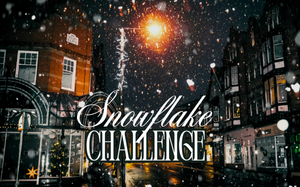
Snowflake Challenge: A warmly light quaint street of shops at night with heavy snow falling.

Write a love letter to fandom. It might be to fandom in general, to a particular fandom, favourite character, anything at all.

I owe fandom for my creativity, such as it is. I wouldn't have written the stories I have without the inspiration of the characters on the screen. Most of my stuff are moments that could have happened offscreen when characters interacted.

And icons! I have absolutely no artistic ability so making icons was a joy to me. I made art, not just had appreciation of talent.
rocky41_7: (Default)
rocky41_7 ([personal profile] rocky41_7) wrote in [community profile] booknook2026-01-06 07:17 pm

Book review: In the Night Garden

Title: The Orphan's Tales: In the Night Garden
Author: Catherynne M. Valente
Illustrator: Michael Kaluta
Genre: Fantasy, fairy tale

First book of 2026! This was The Orphan's Tales: In the Night Garden by Catherynne M. Valente with illustrations by Michael Kaluta. I have no recollection of how this ended up on my TBR and I was a little skeptical checking it out in the library, but I'm glad I stuck with it because it ended up being a lot of fun and I will definitely check out the second volume.

You might be a little confused in the beginning, as In the Night Garden is a series of nested stories within stories and the style takes a minute to get used to, but it's worth it. Valente unfolds a veritable matryoshka of tales into neat blooms whose petals all fit together. Retroactive reveals and recontextualiations are delightful here. 

Valente's vivid prose brings together her fantastical tales with such clarity; she attends frequently to all five senses, so that the reader knows what the characters are not only seeing, but hearing, smelling, tasting, and feeling as well. There's obviously a lot of fairy tale inspiration here, but Valente definitely brings her own flavor. Women are almost always the hero of Valente's tales (though they play the villains too!) and there are such a great variety of them. Monsters abound too, but they get their chance to tell a tale too. (There's also some gentle ribbing at the Arthurian legends, with one witch lamenting about "all that questing" princes get up to.)

I was so engrossed in the work I didn't realize until quite late in the book how little romance factors into it. In a fairy tale inspired book like this, I would have expected a great many characters motivated by romance, but I can only think of two here who are primarily motivated by a love interest, and this delights me too. I'm arospec myself and while I enjoy a good tale of romance, I also weary of how frequently and totally it is centered in stories, so I was really enthused by how little that's the case here.

Friendship and family relationships do make frequent appearances though, and the friendship between the orphan teller of tales and the young boy hanging onto her words is the framing story. Love between mother and daughter, between brother and sister, even between strangers is a common thread.

She also avoids a pitfall I see in various modern fantasy stories which are so keen to explain the magic of their world they strip it of all mystery. Valente's world remains largely unexplained and asks the reader to simply take it as it is, which I found fun and appropriately mysterious.

The style of the book allows Valente to pull in a great many diverse characters and voices, which she does it well. Most impressive though is her ability to pull a cohesive tapestry out of all the various threads she's juggling.

A really fun and unusual story which I enjoyed a lot--a great start to a new year of reading!
sholio: A box of chocolates (Chocolates)
Sholio ([personal profile] sholio) wrote2026-01-06 05:43 pm
Entry tags:

Fandom things

[personal profile] candyheartsex signups close tomorrow! I was going to try to do it this year, but ... I just don't think it's a good idea. I'm starting to really need a break from exchanges, so I'm going to take a couple months off (aside from the ones I already have, which will be over when Festivids wraps up at the end of January) and then show up again when H/C-ex signups open in March.

Amperslash is still looking for two pinch hits! You can find the details here at the Amperslash comm.

• PH 3 - 镇魂 | Guardian (TV 2018) RPF, 镇魂 | Guardian (TV 2018), 镇魂 | Guardian - priest

• PH 9 - Fire Emblem: Soen no Kiseki/Akatsuki no Megami | Fire Emblem Path of Radiance/Radiant Dawn, Honor Harrington Series - David Weber, The Goblin Emperor Series - Katherine Addison

If any of those sound like you might want to write them, the exchange has already had several delays and fingers crossed it'll be able to get them filled and open on time! I know there used to be some Guardian people around here; I don't know if anyone's still actively writing in it, or might be able to advertise the PH in Guardian-centric fandom spaces?
ysabetwordsmith: Damask smiling over their shoulder (polychrome)
ysabetwordsmith ([personal profile] ysabetwordsmith) wrote2026-01-06 08:24 pm

Poem: "Done to Perfection"

This poem is from today's fishbowl. It was inspired and sponsored by [personal profile] fuzzyred. It belongs to the Pain's Gray thread of the Polychrome Heroics series.


"Done to Perfection"
-- a cinquain


Pain's Gray
bakes French pastries --
beignets and petits fours,
choux à la crème and tartes des Alpes --
exquis.

* * *

Notes:

Read about the cinquain form.

French pastries include beignets, choux à la crème, petits fours, and tartes des Alpes.

exquis
French: delightful, delicious
sixbeforelunch: julian bashir, no text (trek - bashir)
Impossible Things ([personal profile] sixbeforelunch) wrote2026-01-06 09:28 pm

snowflake day 2: pets

Snowflake Challenge: A warmly light quaint street of shops at night with heavy snow falling.

Challenge #2: Pets of Fandom

I originally wasn't going to do this one because it got me thinking about Phoebe and I was sad, but then I decided I wanted to talk a little about Phoebe and let myself be sad.

CN: Pet death )
ysabetwordsmith: Damask smiling over their shoulder (polychrome)
ysabetwordsmith ([personal profile] ysabetwordsmith) wrote2026-01-06 08:05 pm

Poem: "Beneath the Sea"

This poem is from today's Poetry Fishbowl. It was inspired by a prompt from [personal profile] dialecticdreamer. It also fills the "Seas Beneath" square in my 1-6-26 card for the Public Domain Day Bingo fest. This poem has been sponsored by [personal profile] fuzzyred. It belongs to the Kraken and Mercedes threads of the Polychrome Heroics series.


"Beneath the Sea"
-- a hexaduad

[Monday, September 25, 2017]

Jules reads
job feeds.
Come work beneath the sea!
Stock Cans; room and board free
.
He knows it's good work and good pay,
but should he go or should he stay?
Tides rise and fall,
feelings, sea call.
Beach, a liminal place;
teen, in similar space.
Jules scans the shore,
texts, Tell me more.

* * *

Notes:

Read about the hexaduad form.