Wednesday, January 7th, 2026 08:13 pm
A recent [community profile] snowflake_challenge prompted to talk about pets (real life, or canon pets) and instead I made two pieces for Hulijing from Mysterious Lotus Casebook:


Preview: a dog and man in hanfu

Full view in my journal
Wednesday, January 7th, 2026 10:30 am


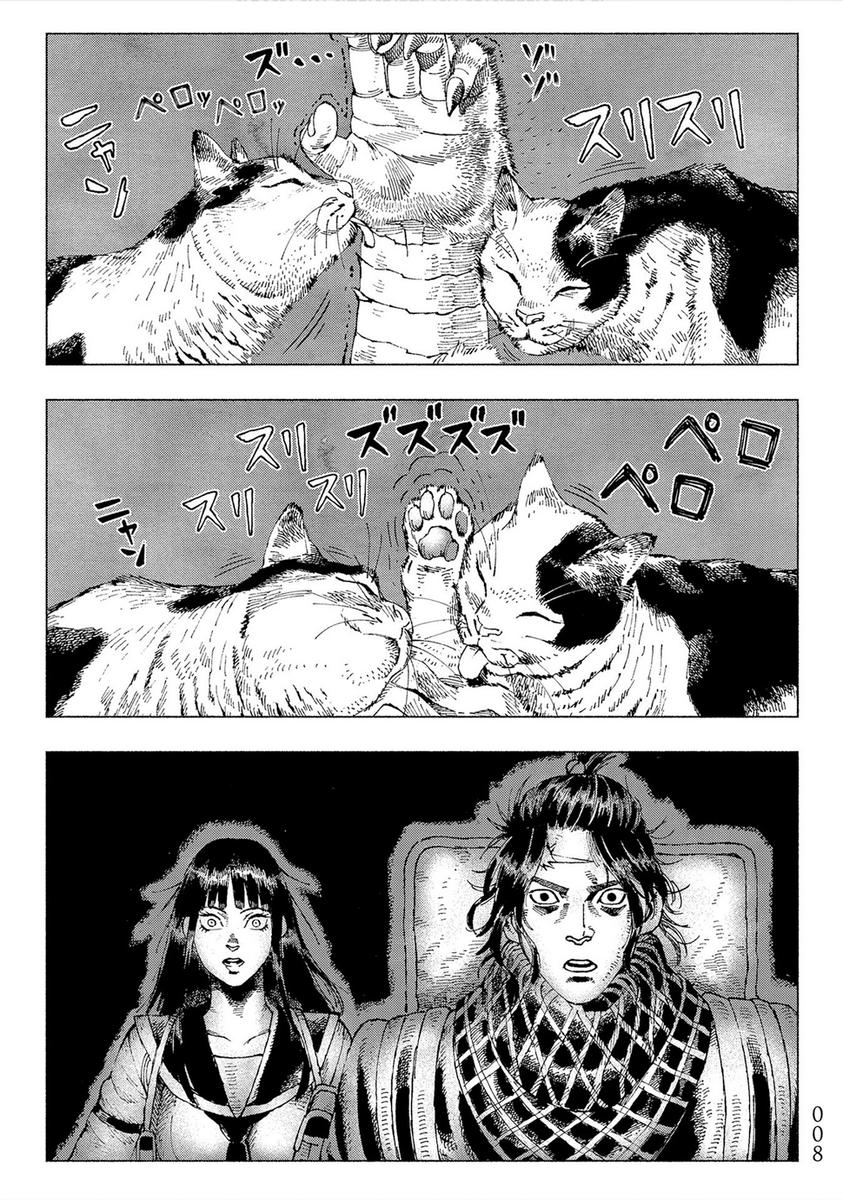
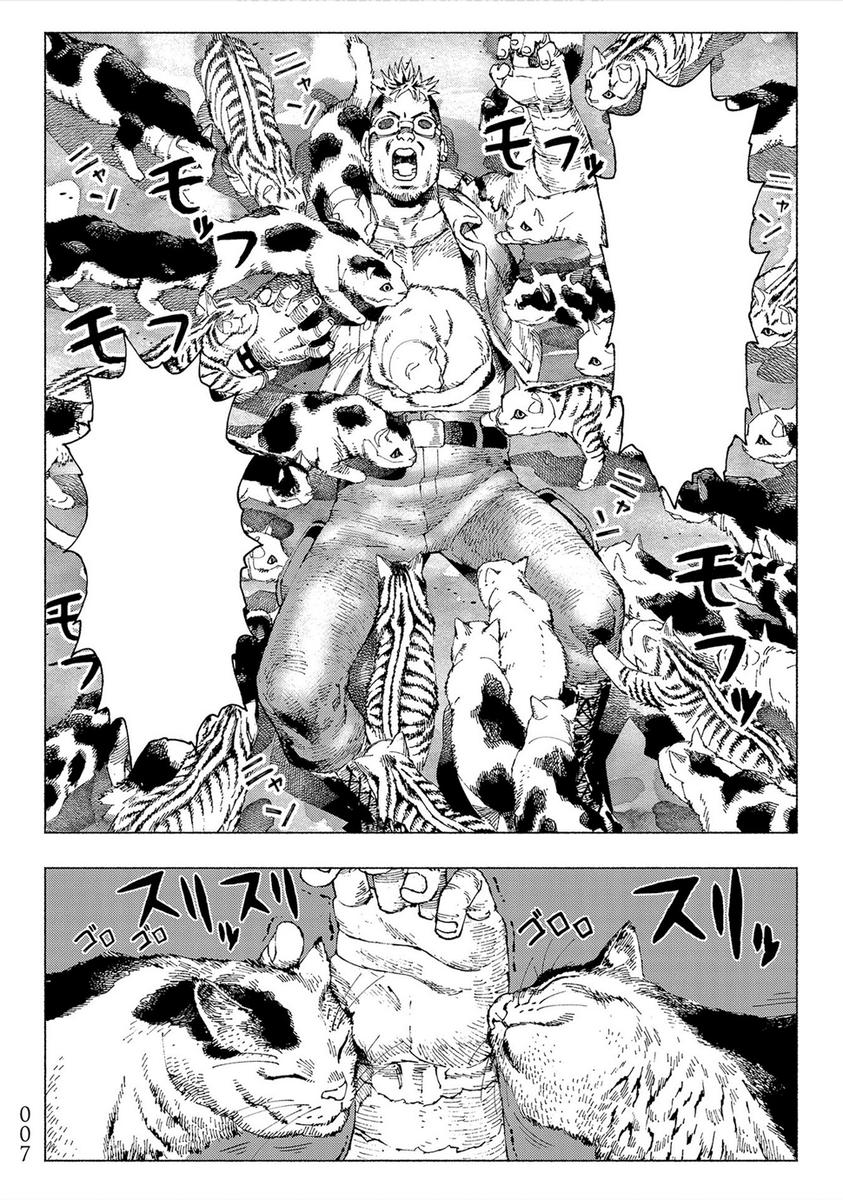
It's a zombie apocalypse, only instead of zombies, there's cats.


In a future in which 90% of the population owned a cat, a strange virus spreads. If you cuddle a cat, or a cat nuzzles you, you turn into a cat! It's a catastrophe! A catlamity! A nyandemic!


Not only are cats everywhere, but the cats are either instinctively trying to turn humans into cats, or they just want to be petted. Cue every zombie movie scene ever, but with cats. Cats scratch at the doors! Cats peer through the windows! Groups of cats ambush you in tunnels!

The characters are all very upset by this, because they love cats! And now there's cats everywhere, just begging to be skritched! And they can't skritch them! "We can't even squish their little toe beans!" The horror!

Needless to say, they would never ever harm a cat. In fact they feel bad when they're forced to spray cats with water to shoo them away.

I'm not sure how this can possibly be sustained for seven volumes, but on the other hand I could happily read seven volumes of it. The cat art is really fun and adorable. I would definitely do better in a zombie apocalypse than a cat apocalypse, because I would never be able to resist those cats.

Content notes: None, the cats are fine.
Wednesday, January 7th, 2026 06:20 pm
I have fallen out of the habit of doing these posts! I stopped for a while when I couldn't talk about Sea Beyond research, then failed to really ingrain the practice again. But no time like the present to start up once more!

What if the Moon Didn’t Exist? Voyages to Earths That Might Have Been, Neil F. Comins. I would not call this book well-written on a prose level, but it's conceptually interesting. Comins goes through a number of different astronomical scenarios and looks at, not just what that would look like now, but how it would (likely) affect things such as the evolution of life. For example, if the moon were closer to Earth, tides would be much stronger, greatly increasing the distance covered by the tidal zone, which would make it harder for sea life to transition onto dry land.

Worth noting, though, that this was originally published in 1993, so it doesn't take into account more recent advancements in astronomy and biology. We'd just barely confirmed our first exoplanet sighting back then, and also Comins very much assumes that "life" must look like it does here. On the other hand, it's sort of charming -- in this age of climate change -- to see his final chapter explore a doomsday scenario where we've completely wrecked the ozone layer, which was a major concern at the time. (In fact the "ozone hole" is healing now, and we should be back to 1980 levels within the next couple of decades.)

Comins has another book along these lines, What If the Earth Had Two Moons?, which I may pick up. Dry prose notwithstanding, these are very interesting to read with an eye toward designing different kinds of worlds!

And Dangerous to Know, Darcie Wilde. Third in a series of Recency mysteries I started reading last year, which are very fun -- though demerits to the author, or perhaps her publisher, for the fact that A Useful Woman is NOT the first book of the "A Useful Woman" series, though both that series and this one, the "Rosalind Thorne Mysteries," involve the same characters. It's more than a little confusing.

But anyway! The premise here is that Rosalind Thorne is of a good family that (thanks to her father) fell on hard times a while ago, and so she scrapes by kind of being an assistant-slash-fixer to ladies of quality, handling everything from sending dinner party invitations to hushing up minor scandals. Naturally, the series involves her getting involved with rather more large-scale problems, which bring her into contact with both an attractive Bow Street runner and her former suitor, who unexpectedly inherited his family's dukedom and so couldn't possibly wed a gentlewoman teetering on the edge of being utterly fallen.

This is the third volume in the "Rosalinde Thorne Mysteries" series, and as the title suggests, it tangentially involves Lord Byron -- specifically, some indiscreet correspondence with him which has gone missing. (Byron himself does not appear, which I think is probably for the best.) I suspect you could hop into this series wherever you like, but there's no reason not to start at the beginning.

Copper Script, K.J. Charles. I very much enjoyed Death in the Spires and All of Us Murderers, so I went hunting for other books of Charles' that are more mystery than romance, the latter being less my cup of tea. I'm pleased to say that Copper Script breaks from the similarities shared between those other two titles -- not that the similarities were bad, but it was going to start feeling predictable if all of them followed similar beats. This one is likewise set in the early 20th century and involves a m/m romance that has to maneuver around the prejudices and laws of the time, but the main characters (a police officer and a man who, having lost one hand in WWI, now ekes out a living by analyzing handwriting) are not former lovers who had a bad falling-out some time ago, etc. The story this time is also sliiiiiiightly fantastical: the handwriting analysis slips over the line into psychic perception. Apart from that, though, it's a satisfying non-speculative mystery, with police corruption and blackmail and murder.

Some by Virtue Fall, Alexandra Rowland. In one of the months I didn't report on, I read Rowland's A Conspiracy of Truths, which is a very odd book -- the main character spends essentially the entire novel imprisoned or being shuttled between prisons, only able to affect things through the people he talks to. I enjoyed it, though certain things about the ending left a sour taste in my mouth; I'm pleased to see that the sequel may address those things.

But this is not that book! Instead it's a standalone novella (I think in the same world), focused on the cutthroat world of Shakespearean-style theatre in a land where only women, not men, are permitted to act upon the stage. The rivalry between two companies gets wildly out of hand, and mayhem ensues. The main character was slightly difficult for me to empathize with, being very much an "act first think later if ever" kind of person, but I felt it all came together pretty well in the end.

Isabella Nagg and the Pot of Basil, Oliver Darkshire. Straight-up one of my favorite things I've read recently, and also (I am not the first to make this observation) the most Pratchett-esque thing I've read not written by Terry Pratchett.

But that doesn't mean it's just a Discworld knockoff! Darkshire has built a similarly bonkers world -- e.g. the sun beetle does not travel at a steady pace across the sky and sometimes decides to turn around, making the length of a day rather difficult to guess at -- but his leaping-off point is a story from the Decameron, and the overall vibe is much more medieval English smashed into the Romantics (a Goblin Market plays a large role in the story). You'll know if you want to read this one about three pages in; either you vibe instantly with the voice or you don't. I did, and I'm looking forward to the sequel even though the protagonist of that one is a thoroughly unsympathetic antagonist from this book.

Audition for the Fox, Martin Cahill. Novella about a character who needs to win the patronage of one of ninety-nine gods and has already failed with ninety-six of them, so she tries the trickster fox god. Surprise, he throws her a curveball! She winds up in the past, assigned to make sure a key event happens in the revolution that freed her country from the grip of its invaders.

I loved the folkloric interludes here (stories of the Fox and other gods), and the fact that Cahill doesn't have his heroine single-handedly win a war. Her job is merely to facilitate one specific event, which is one of many dominoes whose fall started decades of fighting. Which doesn't make it not important! I love how that part played out. But it's also not One Person Saves The Day, which is very, very good.

The Wordhord: Daily Life in Old English, Hana Videen. I had managed to overlook the subtitle, so I thought this book was primarily about language; turns out it's halfway between that and the kind of daily life book I read on the regular anyway. Videen digs into different aspects of life and looks at the words used back in Anglo-Saxon days, seeing how they do and do not map to the words we use today, and how vocabulary reveals the ways things got categorized and connected and what this means for how people lived. Being a language and culture nerd, naturally I found this right up my alley!

A Letter to the Luminous Deep, Sylvie Cathrall. My other favorite thing I've read recently! I think it's no accident that both this and Isabella Nagg and the Pot of Basil are very quirky in their premises and voice-y in their execution.

Here the voice is Victorian-style letter-writing, and the premise is a world (you're soon able to guess it's a colonized planet) where, thanks to a catastrophe in the distant past, everybody has to eke out a living on an ocean where there's basically only one landmass of anything like meaningful size. Society is organized around Scholars in different fields -- a concept that extends to things like art -- and the main body of the story is the correspondence between a Scholar of Boundless Campus (a fleet of migratory vessels) and a woman who lives a shut-in life in the underwater habitat built by her eccentric Scholar mother. Around that you get a second set of letters between the siblings of those two, who are trying to piece together what led up to the explosion that destroyed the habitat and caused the main characters to disappear.

Cathrall does have to indulge in a bit of contrivance to get the whole story into letters, diaries, or other written documents, and to control the pacing of reveals. But I didn't mind, because it all just felt so original and engaging! This is the first book of a duology, and I promptly ordered the sequel, which is sitting on my desk as I type this.

City of Iron and Ivy, Thomas Kent West. Disclosure: this book was sent to me for blurbing purposes.

Alternate-history fantasy, in an England where floral magic is put to uses both trivial and epic, both fair and foul. The era is essentially Victorian, but West acknowledges in the afterword that he's taken a number of liberties with the period. That includes the Reaper, who is obviously meant to be an analogue to Jack the Ripper (the story starts in 1888), but -- and for me, this was crucial -- is different enough that it didn't trip my very strong opinions about how to handle the historical evidence of those murders.

But it is not entirely a story about murders. Elswyth, a scarred young lady, has to come to London to seek a husband after her more beautiful and sociable sister Persephone disappears, because otherwise she'll have no future and her father's entire estate will go to a loathesome cousin. Only Elswyth is convinced her sister's disappearance has to do with the Reaper, and furthermore that the Reaper is probably a gentleman or noble, so her attempt to navigate that world is cover for her investigation.

I read the whole thing in about a day, and very much appreciated the ways in which the ending eschews some of the easy resolution I anticipated. I don't know if there will be a sequel, but some dangling threads are left for one, while the main plot here resolves just fine.

The Tinder Box, M.R. Carey. Disclosure: this book was also sent to me for blurbing purposes. (I read three such over the holidays, but finished the third after the New Year.)

Labeling this one "historical fantasy" is kind of interesting, because it both is and it isn't. I'd almost call it Ruritanian fantasy, except that term means works set in a secondary world without magic, whereas this is more Ruritanian in the original sense of the word: it takes place in an imaginary European country (circa the late 18th century), and then adds magic to that. If it weren't for a couple of passing references to real places and the fact that Christianity is central to the tale, it could almost be a secondary world.

Anyway, genre labeling isn't the important thing here. The story involves a soldier demobbed from his king's stupid war due to injury, who finds that making a living back home is easier said than done, thanks to the peasantry being squeezed to the breaking point and beyond by said war. He's employed for a time with an unfriendly widow, only for everything to go haywire when a giant devil falls dead out of the sky and the widow, who turns out to be a witch, pays him to loot the body. He pockets one innocuous-seeming item for himself -- a tinder box -- which of course turns out to be exactly what the witch was looking for, and so begins a chase.

I think of this book as being anti-grimdark in kind of the same way I used that term for Rook and Rose: it starts out there, but it doesn't stay there. Mag is living on the edge of starvation and then makes a variety of incredibly stupid decisions in how he uses the tinder box (in fairness, partly due to repeatedly not having time to think things through), while Jannae, the witch, is deeply untrusting of everyone and everything. Meanwhile, the tinder box turns out to contain three trapped devils, and I'm often leery of "deals with the devil" type stories. But I loved the direction Carey took this in, and the ultimate trajectory is toward hope and healing rather than pyrrhic victories. It's a standalone, and absolutely fine that way; you get a complete meal here, without being teased with anything more.

(originally posted at Swan Tower: https://is.gd/TE2qj6)
Wednesday, January 7th, 2026 06:43 pm
My definition of "MCU" includes the tv shows (that I've seen). With this in mind, in no particular order:

1) Agatha Harkness & "Teen" spoilery identity is spoilery ) , Agatha All Along: I adored this show in 2024 when it was released and I still adore it, and have rewatched it three times already. There are many reasons why, but the relationship between these two characters is most definitely one of them. It has different layers, not least because the characters are both holding back information about each other and their true reason for the show's quest for a considerable time, and yet they bond in a very real way even before the various reveals. It ends up as mentor/protegé, with a sideline of odd couple and sort of, kind of, family. And I really hope that whatever the MCU future brings, we will see these two together again.

2) Jessica Jones & Matt Murdoch, (The Defenders): speaking of combinations I hope to see again - The big crossover miniseries of the Netflix Marvel shows was flawed in several ways, but the various combinations of characters were all gold, and I loved the Mattt & Jess combo most of all. To put it as unspoilery as possible: their different ways of reaching the top of a building had me in stitches. And the serious character scenes were fantastic. That neither of them was sexually interested in the other might have been why they got along so well, given both characters have a really messy love- and sex life.

3) Tony Stark & Bruce Banner, (The Avengers): their scenes were such an unexpected delight. Very differnet personalities, and yet a meeting of the minds, so to speak, and great chemistry to boot. We hardly saw them in the same room again after Age of Ultron, which I regretted, but given the ensembles grew larger and larger, it was probably inevitable. (Also, the writing for Bruce Banner changed a lot.)

4) Yelena Belova & Alexei Shostakov, (Black Widow, Thunderbolts): I was torn between this and Yelena & Natasha, and Yelena & Kate Bishop, but Alexei wins with a combination of the relationship being showcased in two different movies and the way we see it change through said movies. Also: Alexei may have been a deadbeat (spy) dad, but he can make Yelena smile (intentionally, I mean, not just when he's being goofy) in an incredibly touching way. Again in both movies.

5) Nebula & Gamora (both of them), Guardians of the Galaxy, Avengers: Infinity Wars and Avengers: Endgame: pace Yelena & Natasha, but these are my favourite sisters in the MCU. They get introduced as a seemingly straightforward rendition of bad girl and good bad girl, the evil and the heroic sister - and then it gets complicated. Given their incredibly screwed up childhood and youth (Thanos trying his best to win the worst Dad competition in the MCU), it's a miracle they had non-hostile feelings for each other to begin with, and yet they do. The moment in Guardians 2 when we find out what Thanos did each time Gamora beat Nebula in a match is absolutely gut wrenching. And when we see them connect and change through sevearl movies, it is both touching and absolutely cheerworthy.


6) Mark Spector & Steven Grant, Moon Knight: that they're both played by Oscar Isaacs is the least of it. The miniseries was so clever in the way it introduced us to them which turns certain tropes on their head because it gets spoilery )The result is a sort of "unknown and seemingly very different brothers find each other" tale which also manages to be self exploration and offers moments of grace, support and love in the last three episodes that still make me reach for my hankerchief upon rewatch.


Not included: Peggy Carter & Dottie Underwood (Agent Carter), because the subtext is barely sub, and I definitely ship them, which makes them disqualified for a list of platonic relationships (which I want to remain platonic). But they definitely had "my best enemy" potential in that show. And fantastic chemistry.


The other days
Wednesday, January 7th, 2026 05:26 pm
 The Department of Transport has launched its long awaited consultation on getting rid of the despised term "Invalid Carriages" and bringing the law on "Mobility Devices" into the 21st Century.

I
t's mostly sensible, but I do get a shudder when I come across phrases like "someone who is permitted to use a wheelchair". Permitted? Really?

I'm not entirely certain about "Mobility Device" as the replacement for "Invalid Carriage", god knows it needs replacing, but I don't get the warm fuzzies over "Mobility Device", though I can't actually think of a better alternative right now.

I can see spats with the cyclists coming over whether we're allowed to use cycle lanes (apparently we're not, not even manual chairs - who knew?!)

The intentions seem good, but there really is the potential for this to go horribly wrong, such as options where you can say any power-assisted chair shouldn't be allowed on the pavement. I'm not convinced this was written by someone who actually understood the full range of power assistance types and how different the capabilities are. I need to think about it, but I think we may need more than three classes of "mobility device".

The consultation's open now, and closes end of March.


Wednesday, January 7th, 2026 06:23 pm
It's Wednesday! What are you reading?
Tags:
Wednesday, January 7th, 2026 11:51 am
Introduction Post * Meet The Mods Post * Challenge #1

Remember that there is no official deadline, so feel free to join in at any time, or go back and do challenges you've missed.

On many of the fannish websites we use, our history is easily compileable into "pages". When we look back through those pages, sometimes we stumble upon things that we think are rather cool.

Challenge #4: Rec The Contents Of Your Last Page

Any website that you like, be it fanfiction, art, social media, or something a bit more eccentric!


Include a link to your post if you feel comfortable doing so. Also, feel free to entice engagement by giving us a preview of what your post covers.

And please do check out the comments for all the awesome participants of the challenge and visit their journals/challenge responses to comment on their posts and cheer them on.

And just as a reminder: this is a low pressure, fun challenge. If you aren't comfortable doing a particular challenge, then don't. We aren't keeping track of who does what.

two log cabins with snow on the roofs in a wintery forest the text snowflake challenge january 1 - 31 in white cursive text
Wednesday, January 7th, 2026 10:01 am

The 30th annual Parsec Short Story Contest is open for submissions until March 31, 2026. This year’s theme is “metamorphosis.” Entries should be unpublished and be no more than 3,500 words. The contest is open to writers who have not met the eligibility requirements for SFWA full membership. No entry fee. Full contest rules and information are here.

The winners will be chosen by a team of three judges. I’m one of them. What will I be looking for? A good story, well told, of course. I’ve judged other contests, and I’ve seen a number of otherwise excellent stories that drop the ball at the end. The manuscript reaches “the end” a paragraph or two before the story does, failing to complete the emotional arc of the characters. Just saying. Good luck!

My flash fiction piece “The Souvenir You Most Want” won second place in the 2002 Parsec Contest, which had the theme “Met by Moonlight.” Read it here.

My short story “Think Kindly on Our Fossils” appears in the 2007 Triangulation: End of Time anthology, published by PARSEC Ink. You can purchase it here.

Wednesday, January 7th, 2026 09:34 am
My other group is moving to CoC 3rd edition. That's the one the GM owns. It turns out between the group we own a vast assortment of CoC editions, generally speaking one edition per player, including an original from 1981.

My character, Daniel Soren, has some good stats (Strength, Constitution, Intelligence) and some terrible stats (Dex, Power, and Edu). Unfortunately, in 3E you get Intx5 and Edux15 skill points, so being smart doesn't make up for being a grade school dropout. He does have some decent skills, but very narrowly focused: he's a competent cabbie and a moderately successful pulp writer with ambitions to appear in Weird Tales.

Power governs sanity in CoC so I don't know how long he will last.
Wednesday, January 7th, 2026 08:59 am
astrafoxen on blusky created some visual aids showing Saturnian moon orbits.

They're all great but a detail in this one is worth mentioning.


The odd green squiggle to the right is a visual of Neptune's outer irregular moons, whose orbits around Neptune are large enough to be visible across the solar system. https://www.dreamwidth.org/comments/recent
Wednesday, January 7th, 2026 01:15 pm
Yesterday I braved the colder weather and travelled to the V&A in London to see their exhibition Marie Antoinette Style.

Marie Antoinette (1755–1793) was born an Archduchess in Austria and became the Queen of France in 1774 when her husband, King Louis XVI, ascended the throne (having married him four years earlier when she was 14). She was a patron of the arts and a style icon, and the exhibition examines her style and influence on fashion right up until the present day.

One of the first things you see when you enter the exhibition is the wonderful portrait by Élisabeth Louise Vigée Le Brun (one of my favourite artists). Marie Antoinette is only 23 in this portrait.

IMG_4820.jpeg

The artist described the queen's appearance: "Her features were not regular; she inherited the long and narrow oval face peculiar to her Austrian nationality. Her eyes were rather small, their colour was nearly blue; her expression was intelligent and gentle. Her nose was small and pretty, and her mouth was not too big. But the most remarkable thing about her face was the brilliance of her complexion."

Many of the items owned by Marie Antoinette were sold, stolen or went missing following the French Revolution, which ended her life at 37. Even so, the exhibition was huge, with dresses, jewels, personal items, fabrics, furniture and artwork, and there are many photos under the cut of things she owned, styles she influenced and modern interpretations...
Read more... )

Apologies for the picpam - but it was a wonderful exhibition and I had so many favourite things. It closes in March this year and it well worth visiting.  When I came out of the V&A it was snowing again, but it was worth the trip.
Wednesday, January 7th, 2026 07:10 am
 Just finished: The Magic Mountain by Thomas Mann. Did you know that the edition I have ends with an afterword from the author asking people to read his 1200-page book twice? Anyway I am very proud of myself as I managed to finish it around 30 minutes before the hold was due back at the library.

So, is it good? Yes. Do I totally get it? Not totally, though yes, more than I would have if I'd read it when I was 16. Definitely the time stuff, the illness stuff, the characters who are thinly veiled stand-ins for pre-WWI European political debates, yes. But of course, it's a very different world now—there is no longer the temptation to embrace illness as freedom, the idea that you can just convalesce for years in what amounts to a different reality, the fairy-tale world of the sanatorium. Which is why the ending hits so brutally hard. Structurally, the first half of the book is Hans Castorp's first three weeks on the mountain, and then it goes blurry, and the next seven years pass in a dreamlike state, with the changing of the seasons and the coming and going (through death and otherwise) of the patients being the only sense that time exists at all. And then there's essentially a massacre of half the cast in various ways, culminating in the arrival of WWI, and Hans disappearing into a viscerally described battlefield; time and history do exist after all, and it collides with the dream.

Reading it in 2026, of course, I am struck by the debates between Settembrini, representing humanism, and Naphta, representing totalitarianism (Catholicism/communism/fascism, but look, Mann was very much working out his political ideas in this book), but something I didn't talk about last week is Mynheer Pieter Peeperkorn (yes this is a character name) who pops up late in the book as Clavdia Chauchat's sugar daddy. He's a larger-than-life figure who gets described as kingly and charismatic despite being far too old for her, distracting Hans from the aforementioned philosophical debate with revels, partying, and a hella Freudian love triangle. I'm particularly struck by his speech patterns. Look, the guy is basically Trump; he is charismatic because the other characters (except Settembrini, who winds up being the only character who comes off well by the end) read meaning into his rambling words that isn't there. This book feels so incredibly apropos for our present day despite being over a century old.

Anyway, I finished The Magic Mountain, ask me anything lol.

Currently reading: Invisible Line by Su J. Sokol. You know, something light and fun after reading all that. Ahahaha. This is hopepunk but I'm assuming that the hope part comes in more towards the end. It was first published in 2012 and the first 50 pages were such that I had to text the author and ask if xe had like, rewritten it for the current edition to update it or something? Xe had not. I suppose the direction was obvious in 2012 where the political climate was moving but it's nonetheless one of those unsettling dystopian books, set in a crumbling fascist US rife with surveillance and police brutality.

Laek, a history teacher, Janie, his activist lawyer partner, and their two kids, Siri and Simon, are doing their best to live a normal life in New York, but Laek was a bit more of a spicy activist when he was a teenager, and his fake ID is no longer cutting it. So they make the decision to flee by bike to Montreal, which has declared itself a sanctuary city in tension with the Canadian government. It's basically too relatable, with a bunch of moments where the characters wonder if it's too much, if they should stay and fight the small battles they can or GTFO while it's still a possibility. There's a scene early on of a teachers' union meeting where a new policy means that the teachers must report their children to immigration, and it's the most accurate depiction of this kind of scenario I've run across in fiction, and yeah. If your feelings about living under fascism, or next door to fascism, are escapism, this book is going to be too real; if however, like me, you need to just read more about living under fascism, you'll be into it.
Tags:
Wednesday, January 7th, 2026 01:30 pm
I'm sorry to do this, but I need to take a bit of a break for a while. I'm not in a good place right now mentally, and I'm hitting a limit where running this comm has started to feel more like work than fun.

First of all, I will keep doing the weekly chats - those are the least stressful for me, and as long as I'm still watching dramas I'll have something to contribute to them. I'll also keep up with the maintenance, i.e. tracking the comm, creating tags, commenting, etc.

But for now, I'll put a break on running the Wishlist Wednesday and the Quick Rec Wednesday posts. Participation on those has been very low in general, and remember, you're always welcome to post requests or recs directly to the comm!

I might keep up posting the Did You Make a Thing? entries, let's see how I'll feel towards the end of the month. But again, you're always welcome to post your fanworks directly to the comm!

As for the Topic Tuesdays, I don't know yet. They might still happen sometimes, but not necessarily on the regular, second Tuesday of the month. I love them, but they're also the most stressful entries for me. Coming up with topics is hard, even with help from you. Especially so, when I have no experience with or no opinion on a certain topic, and struggle to play host to those discussions. But don't let that deter you. Whenever you want to talk about something, please simply make a separate discussion entry to this comm.

I adore our picspam collections, but they're also the most work intensive entries, so I won't make any promises.

I also won't make any promises or predictions about the time frame of these changes. Who knows? Maybe I'll be perfectly fine again next month and return to the regular schedule. But maybe it will take me a year instead. What I do know is that I'm not done with c-ent in general, there are still plenty of dramas to watch and books to read, and I'm looking forward to doing so!

I'm a bit sad about all of it, but I'd rather take a step back now and still enjoy c-ent, than turn the whole thing sour for me.

And if anyone had interest in hosting one of those formats for now, I'd be fine with that, too. PM me, if you like, or if you feel unsure about it.
Wednesday, January 7th, 2026 03:32 am
Ron Chernow, Grant (Penguin, 2017)

Chernow is the author whose biography of Alexander Hamilton inspired Lin-Manuel Miranda. I decided to see what he could do with a thousand pages on U.S. Grant, most of my reading on whom had been quite succinct.

What interests me about Grant is this: after brave and intrepid service as a junior officer in the Mexican War, he was a complete failure in the peacetime army and then in civilian occupations after he resigned his commission. But when the Civil War broke out, and men with military experience were at a premium, no matter how shoddy they might seem, as soon as he reached command level Grant showed instant assuredness and promptly became the most successful general on the Union side, a status he kept to the end despite various setbacks. How did he do this?

My conclusion is that Grant had what might be called moral courage. This is, as Grant discovered the first time he led troops into action, a different thing from personal bravery under fire. It's the courage to lead and order other men into battle, knowing that many will be wounded or killed, and then to do it again the next day. Many of the generals either shied at the idea of exposing their troops to injury or death, or were so appalled at the results when they did that they withdrew and did not press the attack - which only, Grant felt, made the war last longer and become even bloodier.

The problem with this book is that Chernow never discusses where Grant's moral courage came from or how he developed it. The very first time Grant led troops into combat was early on in the Civil War. He was a colonel looking for the camp of some Confederate raiders led by one Col. Harris, and he was extremely nervous about commanding an attack on the enemy, but when he got to the camp he found that the rebels had learned he was coming and vamoosed.

In his memoirs, Grant writes two key sentences: "It occurred to me at once that Harris had been as much afraid of me as I had been of him. This was a view of the question I had never taken before; but it was one I never forgot afterwards." Chernow quotes the first of these but not the second. He doesn't address the question of Grant's moral courage at all until he gets to the Overland Campaign of 1864, when Grant for the first time faced an opposing general with as much moral courage and tactical skill as his own, and the results were an impasse leading to grisly slaughter. But Grant carried on, despite the toll, knowing that, if he was to prevail, to withdraw and lick his wounds would be worse. Here Chernow quotes from Grant defining this courage in the way I did above, but he doesn't analyze or discuss it.

The questions that interest Chernow are very different. He is absolutely absorbed by the rumors of Grant's alcoholism. This is probably the book's major theme. Repeatedly Chernow quotes testimony swearing that Grant had been seen falling-down drunk, and repeatedly he insists that other evidence renders these stories extremely doubtful. So were these malicious lies, or what? We never learn.

In the postwar part of the book, a recurrent theme is Grant trying to make up to the Jews for an injudicious order he'd issued early in the war, expelling all Jews from the territory he controlled on the grounds of the actions of some rapacious Jewish merchants. His subsequent regret for this becomes a major theme.

Of course by the end of the war, Grant's sad earlier life had vanished from his personality. Now he was the Army's chief general, then President of the U.S., and he was used to being in command. Chernow depicts Grant as chief peacetime general in the Johnson administration as developing a degree of political savvy he'd never previously had to show, but then he depicts Grant as president and afterwards as politically naive and the constant victim of scoundrels and shysters - something that had happened during the war too, but only as a minor feature. Chernow does not attempt to reconcile the savvy and the naive Grant.

I was also puzzled by some fragmentary material testifying to hints in Grant's earlier life of the greatness he would only display later. There's a story of Gen. Taylor, the army commander in the Mexican War, coming across Lt. Grant taking charge of his men in clearing a waterway, and saying "I wish I had more officers like Grant." Wow, what a testimony. But what is the source? Endnotes reveal it's from a newspaper article published on the occasion of Grant's death 40 years later. Somehow I doubt its veracity. Elsewhere Chernow is sometimes cautious about accepting unverified stories, but not here.

There's a lot of useful and well-researched material in this book, but for all its extent I do not find that this book captures the man.
Wednesday, January 7th, 2026 10:45 am
 I dreamed an old lady on a bus offered me LSD. I took it of course. My vision of the sunny coastal landscape we were passing through was enhanced.

I chanced this morning on a video about paranormal goings-on at Beachy Head- the landward side of which I can see from our windows. The phenomena include shadow people, white ladies. the sense of being watched and lights manoevering in the sky and rising and descending into the sea. I hadn't known this was happening but I'm not surprised- and that Beachy Head- the highest cliff on this coastline- and a magnet for suicides- should be a place where "the veil is thin".

Someone on Quora offered the opinion that the present occupant of the White House was the handsomest president ever. The opinion is so self-evidently absurd that I assume it was made in bad faith or by a bot. One person who chose to engage said "No, the handsomest president was JFK" and- as I coughed myself to sleep last night- I found myself engaging too. I considered the claims of this man- who was after all, a film star

Official_Portrait_of_President_Reagan_1981.jpeg

But decided that handsomeness is not the same thing as good looks or beauty, and that dignity, gravity and presence are also involved, so that my choice finally lit on this fellow- arguably the most gifted individual ever to hold the office.....

Official_Presidential_portrait_of_Thomas_Jefferson_(by_Rembrandt_Peale,_1800).jpeg
Wednesday, January 7th, 2026 08:37 am
A reasonably contented man 

Sir Harry Ferraby considered himself a reasonably contented man. Whenever he went to Firlbrough – and sure, they would soon have to be decamping to go there with this election impending, would look very strange did he not return there to support Bobbie Wallace! – was obliged to indicate, o, very subtly, of course, that was somewhat of a trial to be the one that represented the interests of Ferraby, Dalgleish and Gaskell in the metropolis, but alas, someone had to be on the spot. To be able to go into the City – talk to Government offices – meet with Members of Parliament - &C&C.

As well as keep up with all the new developments! Some of what one heard at lectures at the Royal Society or saw at demonstrations at the Royal Institution might still be somewhat theoretical, but nonetheless, worth keeping one’s eye upon. Fellows that it was sensible to make the acquaintance of.

But, taking it all in all, he was happy living here in lovely leafy Blackheath with his lovely lively Louisa and his adored offspring – very convenient for the City and for Westminster but entirely healthful. And then, here were his brothers and sisters close at hand – Meg in Highbury with Sebastian – Quintus and Sukey in that part just north of Oxford Street that medical men were beginning to move into – his beloved baby sister Flora no great distance away in Surrey – and for the past few years they had had the delightful presence of Josh, rather than the worry of what might come to him upon some zoological expedition.

And perhaps it was for the best for familial harmony that Bess resided in Leicestershire on the Ollifaunt estates, because even in these years of maturity they were wont to fall into brangles, though now it was over business matters. Indeed they were greatly fond of one another, and Harry had been able to be of considerable assistance to Bess over certain stage machinery in her theatres, but quarrelling was something of an antient habit with 'em.

Had been a great pleasure to turn his hand to those matters of machinery – for was there one source of regret and discontent, was that his course had not led him into the career of an engineer. Had been well-trained in that, but had fallen out that by the time he was out of his articles, his father had been in the greatest need of a reliable deputy by his side.

For there was Josiah Ferraby – shortly to be knighted and subsequently raised to the rank of baronet – an MP that took his responsibilities in the governance of the realm with all due seriousness, and attended the Commons a deal more regularly than many that wrote those letters after their names! – and also undertook a deal of work in the matter of getting up private bills, and talking to government offices, for the improvements under hand in Firlbrough. While Mama had been entirely capable of dealing with most of the business matters as far as correspondence went, it seemed prudent to send young Mr Ferraby, that was being brought on in the family enterprize, to meetings in the City &C. Had been provided with a cicerone in the person of Sebastian Knowles, some few years his senior, already part of the Raxdell House set through his sister’s marriage to the Duke of Mulcaster.

There had been a good deal of fascination in it all – and talking it all over with his mother and father, and Sebastian, and then with Sandy MacDonald, that was entirely an intimate of the east wing household at Raxdell House. Then having the occasional flash of illumination from a passing comment of Clorinda Bexbury’s.

No, he could not say he had been forced to drudge at uncongenial toil –

Although there had been times – after his father’s sudden, too early, death, and then during his mother’s long and painful illness – when indeed he had felt it a weight bearing upon him – had more than once even come to weeping in Lou’s arms.

But they had pulled through.

Did Harry occasional desire to have work in his hands, why, he had a workshop at this house where he might tinker a little, and where he might convoke with Ben Wilson and others about their inventions, and make suggestions.

He had lately observed Una Wallace, that he fancied, from how she went about with the wooden bricks, showed a talent towards engineering. For were you the brother of Flora Ferraby you did not suppose that women were incapable of such! And had they not heard of Clorrie Thorne, in New South Wales – that was now Clorrie Hackstead – had been trained as surgeon by Mr Carter and was as competent a hand with the scalpel as any product of your fine hospitals? Quintus indeed would say that in past times had been noted female physicians and surgeons, 'twas entire vulgar prejudice to suppose their sex incapable.

He had seen Lou’s warm heart moved to pity at Una’s plight – dispatched much like a parcel by her father in Nova Scotia to his Wallace relatives in London – some little worries about her health, her mother, a lady of the native tribes of Upper Canada, having died of consumption shortly after her birth, making residence in Town seem somewhat imprudent –had led 'em quite to concede to her suggestion that Una should come live in the healthful airs of Blackheath. Saw how it painfully reminded her of when she herself had been dispatched, along with her governess Miss Millick, to reside with her horrid relatives the Fraylinghams.

Knew that Lou greatly regretted that she had not been able to bear him more children – had been a number of sad miscarriages 'twixt Maria and Hal – and that perchance led her to extend her maternal care – had greatly taken to the young Frinton boy that was a schoolfellow of Adam Knowles and the Ollifaunt boys –

But though he might be fatherless one saw that Ginevra Frinton was an excellent woman that brought him up in quite exemplary fashion! And sure, 'twas hardly for the Ferrabys to go be priggish in such cases – for Harry himself had been born somewhat precipitate after his parents’ nuptials, that having been the only means Eliza Hallock had found to get her father to concede to her wedding that scapegrace Josiah Ferraby! Was not Clorinda Bexbury, in the days of the Regent a crack Lady of the Town, entirely in the capacity of a beloved family member, even was she not the actual relative that rumour gave out?

He hoped that this mission that Clorinda and Sandy MacDonald – himself quite part of the family – were about today did not distress Una.

One quite saw the sense in it. Here was a young man, a groom of good character and given out an excellent hand with horses, taken in enmity by a fellow of wealth and influence, turned off without a character, and 'twas feared he might be in further danger from having, perchance, in all innocence, witnessed some malign acts. So might it not be a fine thing for him to go seek his fortune in Nova Scotia? Surely the Collinses and Colonel Wallace could use a chap of his talents in their enterprize raising work-horses as well as fine riding-nags.

Was certainly a prepossessing young fellow! Fine open face – had clearly took trouble over his appearance, though one saw the clothes were somewhat patched and mended. Harry caught Nick Jupp’s eye and Nick nodded approvingly – one might apprehend that he had been making his own judgements and that they were positive. Dared say that would have been entire happy to advance him to a place in his brother Sam’s livery stables: but one felt young Oxton might be safer well out of Town, where he might catch his former employer’s eye.

This surmize was confirmed by Sandy – Nick felt quite a regret that Jupp’s might not have the services of the fellow! Quite the nicest hand with horseflesh, The Lady herself had commented upon it.

One might trust Belinda Penkarding’s opinions in the matter!

So here was an introduction being made, and Oxton being very civil to Una, and demonstrating an ease that suggested he had sisters of his own –

Let us not hover, said Clorinda, but stand back a little and discourse of indifferent matters.

In due course Oxton came and said, sure Nova Scotia sounded to be a very fine place, and Miss Una gave the finest character to the Collinses. And indeed, had oft wished to see the world but had not seen how that might be without 'listing, or going for a sailor, that had no taste for.

So he and Sandy went convoke somewhat over the practicalities.

Harry went over to Una, and saw that her eyes looked a little damp.

Come, he said, let us go into my workshop for a spell.

Once inside he handed her his large clean handkerchief and she mopped her face and blew her nose and said, 'twas nothing – just remembering –

Are you homesick?

She frowned a little, and was silent for a moment and at length said, sometimes she was – would strike her quite sudden –

But, she cried, almost in agitation, you must not suppose that I wish to return!

No? Just because your Papa thought it a good idea to send you here, does not mean one might not reconsider –

She gave a little sigh. It was very lonely – I should feel that more now after being here – and I should not have the advantages of a good girls’ school

He minded that that had been a strong argument for Blackheath!

– I should miss you all very much.

And we should miss you.

A light tapping on the door and came in Clorinda.

Well, that is very happily resolved!

She glanced from one of them to the other. Lou tells me that Una becomes quite your apprentice – shows a talent towards engineering –

She does so, said Harry.

Una quite glowed.

Clorinda smiled. I fancy, she said, that requires more mathematics than she is like to get at that very good school. Here is Janey Merrett, trying to get up interest for a young woman in her coterie to go give lessons

Harry grinned. So you go about to contrive! Should you like that, Una?

She looked quite ecstatic at the thought.